
Spring Type and Condition
The inspection identifies a torsion or extension setup and checks for a broken coil, loss of tension, corrosion, deformation, and previous mismatched work.
Serving Starke, Florida
Spring repair in Starke, Florida
Restore balanced door movement with a careful inspection, correctly matched replacement springs, and a complete operating check.
Diagnosis and safety
Garage door spring repair in Starke, FL addresses one of the hardest-working parts of the door system. Springs counterbalance the door's weight so it can travel through the tracks without placing the full load on the opener. When a spring breaks or loses tension, the door may become extremely heavy, stop partway, sit unevenly, or refuse to open.
We inspect the spring system, identify the spring type, and check the connected hardware before recommending repair. The goal is to restore balanced movement rather than treat the opener as the source of every problem. If the door has general track, roller, cable, or opener symptoms that extend beyond the spring assembly, a broader garage door repair assessment can identify the full scope.
Do not try to unwind, stretch, clamp, or replace a garage door spring without the proper tools and training. Torsion springs hold substantial stored energy, while extension springs can recoil when damaged or disconnected. Keep people and vehicles clear of the door, leave it closed when possible, and arrange an inspection.
Warning signs
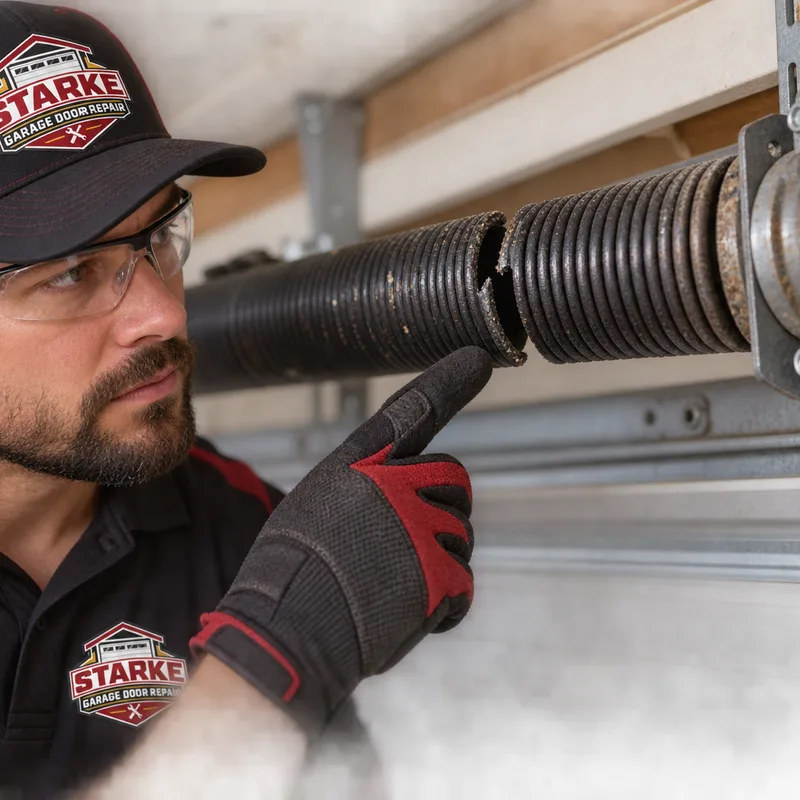
A loud bang from the garage often means a torsion spring has snapped. The break may appear as a visible gap in the coil above the door. On an extension-spring system, a stretched, hanging, or separated spring may be visible beside the horizontal tracks.
Other warning signs are less obvious. The door may lift a few inches and stop, close harder than usual, look crooked, or feel unusually heavy when operated manually. An opener that strains does not necessarily need replacement. It may be trying to lift a door that has lost spring assistance.
Stop operating the system if a lift cable has come off a drum, the door is tilted in its opening, or a spring is visibly broken. Repeated attempts can pull cables loose, bend track hardware, or place extra stress on the opener. Florida humidity and heat can also contribute to corrosion and lubricant breakdown, so rust, noisy coils, and rough movement deserve attention before a complete failure.
Complete system check
The inspection identifies a torsion or extension setup and checks for a broken coil, loss of tension, corrosion, deformation, and previous mismatched work.
Replacement depends on the door's weight and spring specifications. Wire size, inside diameter, spring length, wind direction, and lift configuration matter on torsion systems.
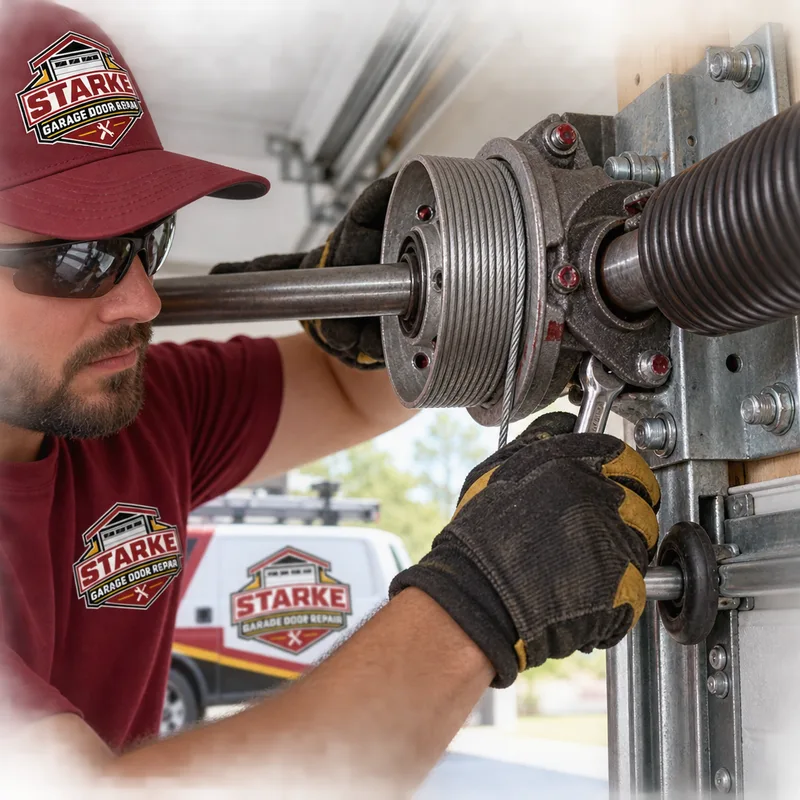
Lift cables, cable drums, center and end bearings, brackets, and the torsion shaft are checked because these parts work with the springs to carry the door.
After the spring work, the door should remain controllable through its travel and hold at appropriate points without dropping hard or shooting upward.
The opener is tested only after proper balance is restored. Travel limits and force behavior may need attention if the door was operated while a spring was failing.
Extension-spring systems should have properly routed containment cables. Loose fasteners and damaged mounting points also need to be identified before normal use resumes.
Spring configurations
Torsion springs are mounted on a shaft above the door opening. As the door closes, the springs wind and store energy. Cable drums at the ends of the shaft control the lift cables. Repair requires securing the door, releasing stored tension with appropriate winding bars, matching the spring specifications, winding the replacement to the correct setting, and testing balance.
Extension springs run alongside the upper horizontal tracks and stretch as the door closes. We check the cables too when replacing a spring. Their pulleys, cables, attachment points, and containment cables all get inspected for wear before the work is done. A broken extension spring should not be replaced by appearance alone because two springs can look similar while having different lifting characteristics.
A two-spring torsion assembly deserves careful evaluation when one spring breaks. Both springs have usually completed a similar amount of work, but replacement decisions depend on their condition, dimensions, and compatibility. They can inspect the complete assembly and explain which parts require attention before work begins.
Service sequence
Tell us what happened, whether the door is open or closed, and whether any cable or spring is visibly loose. Avoid moving an unstable door before the service visit.
The spring arrangement, door balance, cables, drums or pulleys, tracks, rollers, brackets, and opener are checked. Measurements establish the spring specifications rather than relying on visual similarity.
The findings determine whether the work involves a spring alone or related components damaged during the failure. The scope should be clear before repair starts.
The door is secured, damaged components are removed, and correctly matched springs are installed. Tension is set for the door and hardware configuration.
Manual balance is tested before powered operation. The door is then cycled to check cable tracking, travel, noise, opener behavior, and safe closing.
Repair details
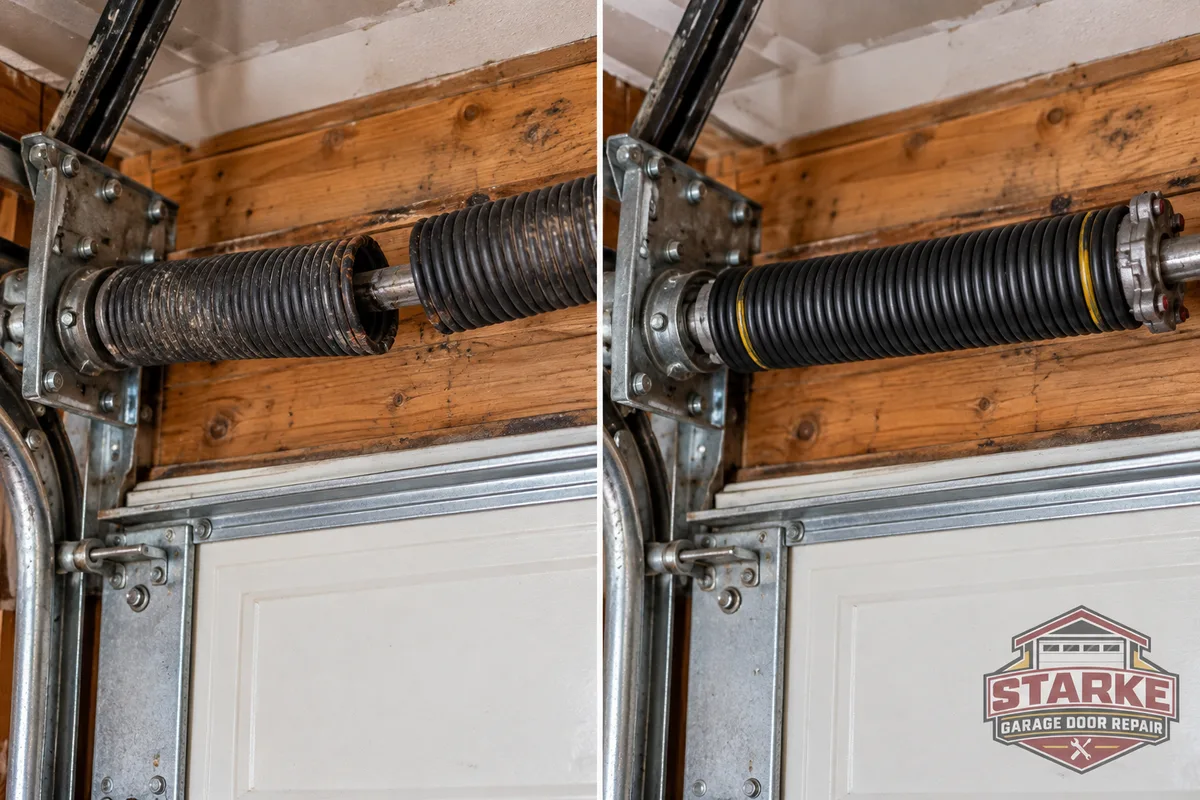
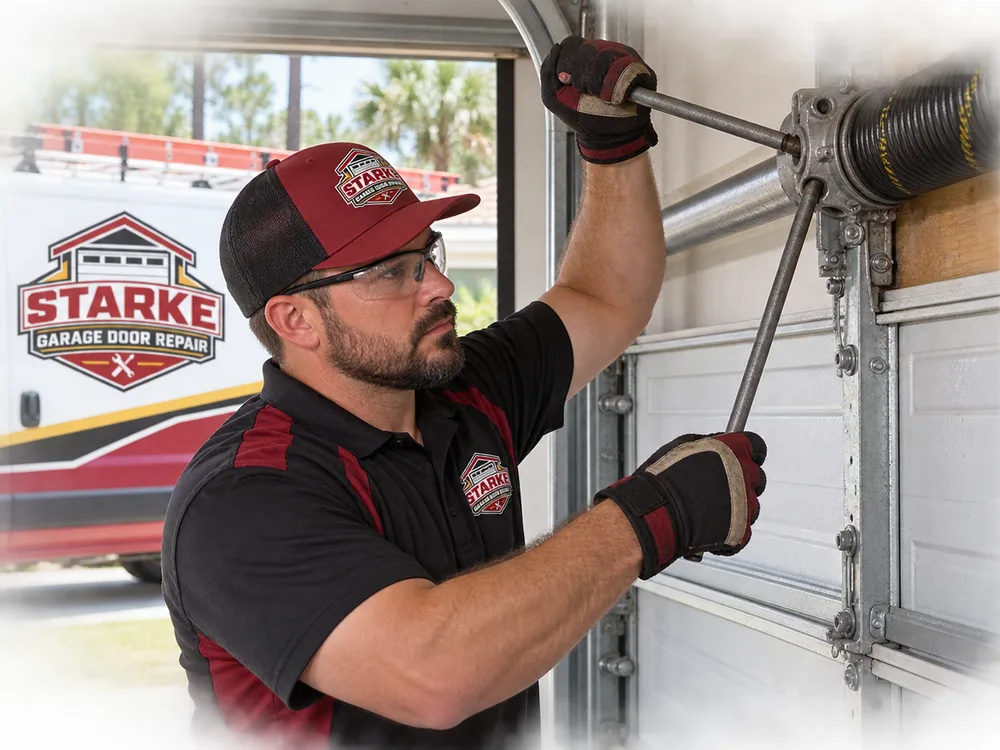
A broken or weakened spring can leave the door unsafe to move and place added load on the opener. Arrange an inspection so the spring system can be measured, repaired, and tested before regular operation resumes.
CALL NOW: (904) 966-4094Common questions
It is safer to leave the door closed and avoid operating it after a spring breaks. The door may be too heavy for the opener, and lifting it can allow the door to fall or the cables to lose tension. If the door is stuck open in Starke, keep the area clear and tell Starke Garage Door Repair its position when arranging service.
The work depends on the spring setup and related damage. A tilted door, displaced cable, worn bearing, damaged drum, or difficult-to-source spring changes the work required. Inspection and measurement come before a firm timeframe.
Both springs should be evaluated, but the right choice depends on the door and whether the springs are a matched pair. Springs installed together have normally carried the same cycles, so the remaining spring may have similar wear. Measurements and condition determine whether replacing the pair will preserve balanced lifting.
The opener should not be used to compensate for a broken spring. An opener is designed to move a properly balanced door, not carry its full weight. Continued attempts can strain the motor or drive system and may cause cables to come off their drums.
Useful details include whether the door is open or closed, whether it is crooked, where the springs are mounted, and whether a cable is loose. The door's material and approximate size can also help with planning, but spring measurements still need to be verified at the door.
A door may still move because the opener or a second spring is carrying part of the load, but that does not make continued operation safe. Uneven lifting can cause the door to bind, shift cable tension, or overload other components. The system should be inspected before further use.
Get started
Describe what the door is doing and whether it is stuck open, closed, or uneven. A proper inspection can identify the spring specifications, related hardware issues, and the repair needed to return the system to normal operation.