Broken Spring
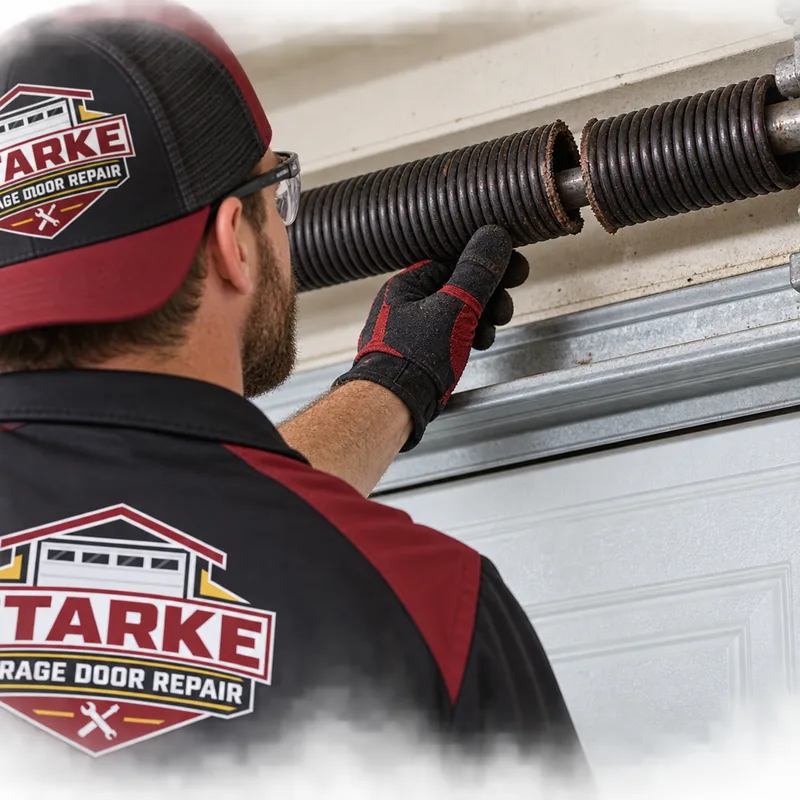
A sharp bang followed by a door that will not lift often points to a broken torsion or extension spring. Do not try to lift the door by hand while it remains connected to an automatic opener.
Serving Starke, Florida
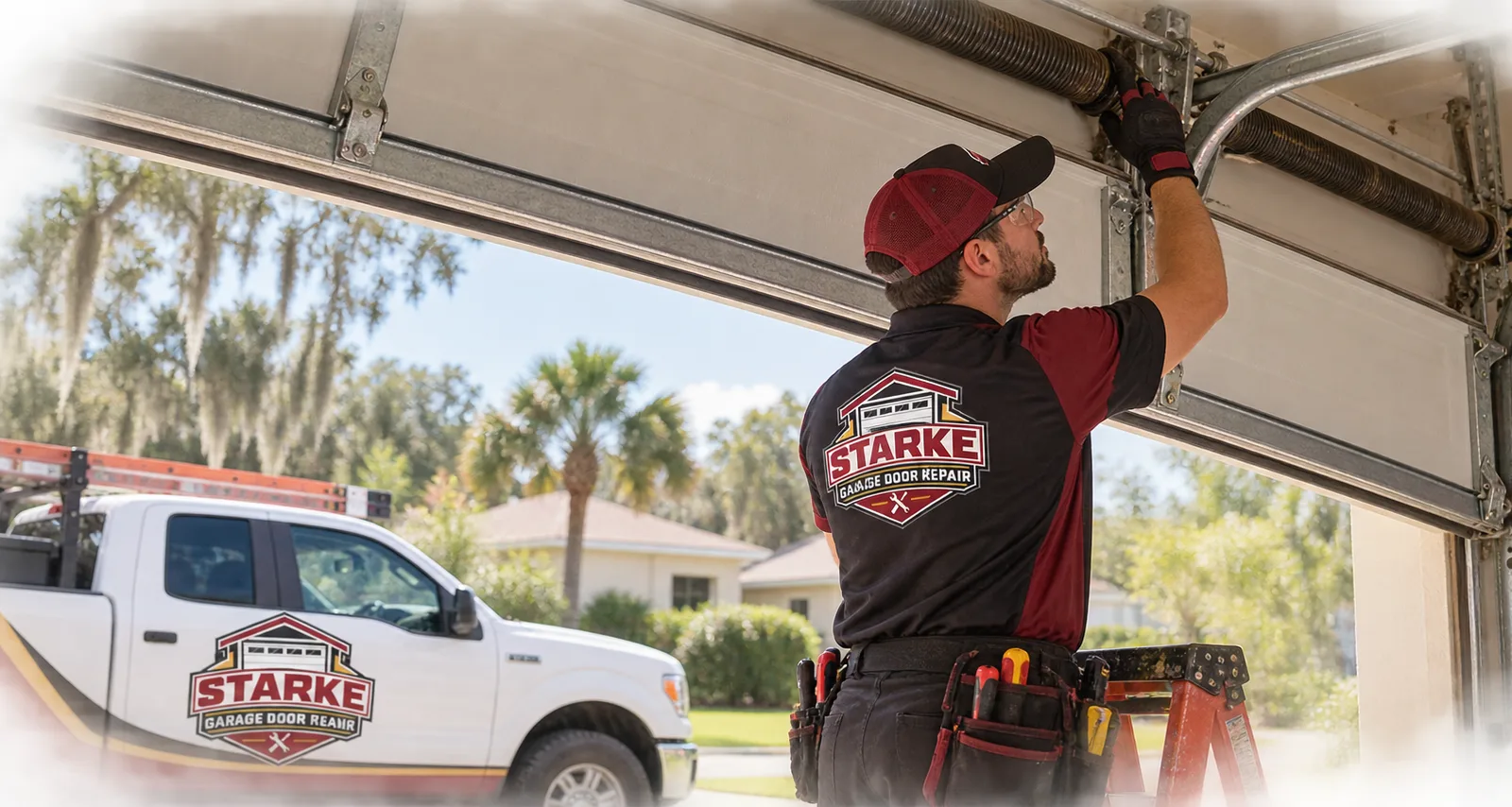
Emergency garage door repair in Starke, Florida
Get urgent help with a door that is stuck, crooked, off track, or unsafe to operate. We diagnose the failure and fix what is needed to restore access.
Immediate safety
Emergency garage door repair in Starke, FL is appropriate when a failed door blocks a vehicle, leaves an opening unsecured, or creates an immediate safety concern. A door hanging at an angle, a cable loose beside the track, a broken spring, or a panel that has left its rollers should not be forced. Stop using the opener and keep people, pets, and vehicles away from the opening.
A garage door is heavy and operates through a counterbalance system. Torsion springs or extension springs offset that weight while cables carry tension to the bottom brackets. When one component fails, the opener may no longer be able to lift the door safely. Repeated button presses can damage the opener, bend the top panel, pull hardware loose, or allow the door to fall farther out of alignment.
We handle urgent troubleshooting for homes and businesses in Starke. The first goal is to identify what failed and determine whether the door can be secured, returned to operation, or left safely closed until a required part is available. For nonurgent maintenance and planned repairs, garage door repair in Starke covers the broader range of door, track, spring, cable, and opener work.
Urgent warning signs
A sharp bang followed by a door that will not lift often points to a broken torsion or extension spring. Do not try to lift the door by hand while it remains connected to an automatic opener.
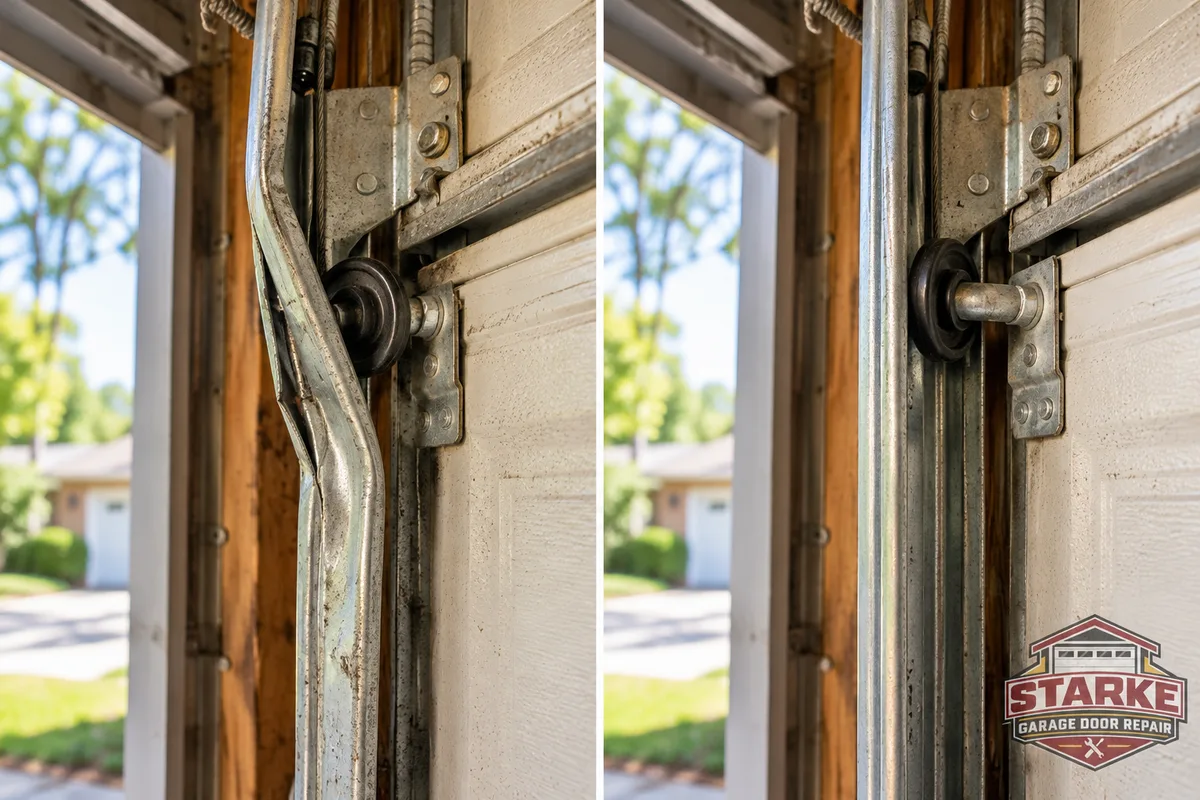
A door may become crooked when a roller leaves the track, a cable slips, or an impact bends the track. Operating it again can twist the remaining hardware and increase the risk of a drop.
Frayed, slack, or detached lift cables can leave one side unsupported. Bottom brackets and spring-connected cables remain under substantial tension and should not be adjusted without proper tools.
An open door can expose vehicles, tools, stored belongings, and an attached entry into the building. Diagnosis may involve the springs, tracks, rollers, opener carriage, photo eyes, or manual lock.
A motor that hums, a trolley that moves without the door, or a door that immediately reverses requires systematic testing. The problem may be mechanical even when the opener appears to be at fault.
A vehicle strike can deform a panel, track, hinge, or bottom fixture. The door should remain stationary until its alignment and load-bearing hardware have been checked.
Before help arrives
Leave the door in its current position unless moving it is necessary to prevent immediate harm. Do not stand or park beneath a partially open door. Keep children and pets out of the garage, and use another entrance if one is available.
If the door is fully closed, leave the opener connected unless a technician directs you otherwise. Pulling the emergency release does not make a heavy door safe to lift. With a broken spring, releasing the trolley can remove the only mechanism helping hold the door in place. If the door is open or crooked, do not pull the release cord.
You can check whether the opener has electrical power and whether an object blocks the photo-eye sensors near the floor. Avoid loosening brackets, winding springs, removing cables, or pushing rollers back into the track. Those repairs involve stored spring tension and the full weight of the door.
Florida thunderstorms can interrupt power and affect opener electronics. A power outage does not automatically mean the door itself is damaged, but unusual movement, visible cable problems, or a loud spring break indicates a mechanical issue that needs inspection.
Service sequence
Tell us whether the door is open, closed, crooked, or blocking a vehicle. Mention any loud bang, impact, loose cable, burning smell, or opener noise so the immediate risk can be assessed.
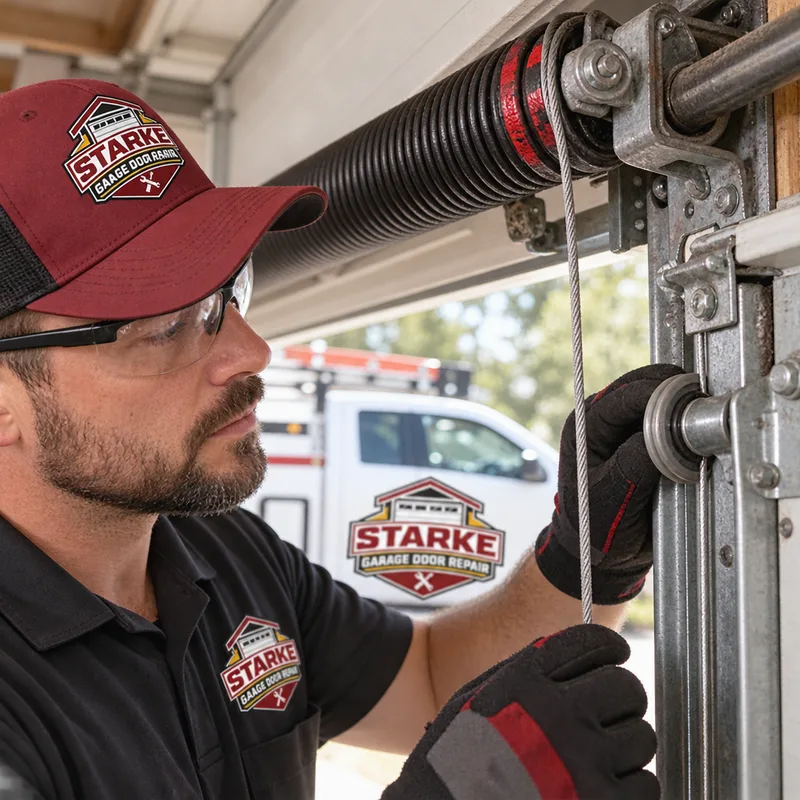
The diagnosis should cover the springs, cables, drums, tracks, rollers, hinges, panels, opener connection, safety sensors, and mounting hardware. This separates the failed part from damage caused by the failure.
Before work begins, the findings should identify which components need repair or replacement and whether other damage prevents safe operation. Part compatibility depends on the door's size, weight, construction, and hardware.
After the approved work, the door is checked through its travel. Testing includes balance, alignment, cable tracking, opener force response, travel limits, and the photo-eye reversal system when an automatic opener is present.
You receive a clear account of what failed, what was repaired, and any condition that still needs attention. The door should not return to routine use until it moves evenly and its safety functions respond correctly.
Complete diagnosis
An emergency repair should correct the cause, not only the visible symptom. A cable may come off because the door became obstructed, a drum shifted, the track moved, or a spring stopped carrying its share of the load. A roller may leave the track after an impact or because a hinge, bracket, or track fastener failed. Testing the entire system helps prevent a damaged component from being overlooked.
Spring selection is based on the door's actual weight and operating geometry. Wire size, inside diameter, spring length, drum type, and door height affect torsion spring matching. Installing an arbitrary spring can leave the door too heavy, cause it to rise on its own, or make the opener work harder than intended.
Panels also require a judgment call. A dent may be cosmetic, but a split stile, crushed section joint, or severe bend can affect how the door carries load. Replacement panels must match the model and dimensions, and an older door may not have a compatible section available. In that case, Starke Garage Door Repair can explain whether temporary securing, component repair, or full door replacement is the sound option.
Starke sits along major travel routes including US 301 and State Road 100, so a garage door failure can disrupt a household departure, a business opening, or access to work vehicles. Sharing the door's position and the nature of the failure at the start helps set the right priority and prepare for the likely repair.
Repair details
Common questions
Do not operate a garage door with a confirmed broken spring unless a qualified technician has assessed it. The spring counterbalances the door's weight, so the opener may strain, the top section may bend, or the door may fall after being lifted. Keep the door closed and arrange urgent service in Starke if a vehicle is trapped.
Report the door's current position, whether it is crooked, and any visible spring, cable, track, panel, or opener damage. Also describe any bang, impact, smoke, or grinding sound. A photo of the full door and damaged area may help identify the door type, but it does not replace an on-site safety inspection.
An off-track door can often be repaired when the panels, tracks, rollers, and lift system remain serviceable. Replacement may be necessary when an impact has torn mounting points, crushed a panel joint, or severely bent structural parts. We inspect the cause before recommending the repair scope.
A door that closes and reverses may have blocked or misaligned photo eyes, an incorrect travel limit, excess resistance in the tracks, or a force-setting issue. First remove objects near the sensor beam and clean the sensor lenses. If the door binds, sits unevenly, or has loose cables, stop operating it and request repair.
The door may be secured temporarily when its condition allows safe positioning and restraint, but the available option depends on the failure. A severely damaged or unsupported door may need to remain untouched until compatible parts or equipment are available. The technician must assess the door before deciding whether temporary securing is safe.
A complete repair depends on the diagnosis, compatible part availability, and the extent of damage. Standard hardware failures may be repairable during the visit, while unusual springs, matching panels, specialty tracks, or heavily damaged commercial components may require ordered parts. The immediate priority is to make the condition safe and let you know what the repair involves.
Paired springs are commonly evaluated together because they have operated through the same cycles, but the correct recommendation depends on the door's spring arrangement and condition. Both springs must also be matched to the door's weight and geometry. The technician can explain the options after identifying the installed system.
Get started
Tell us what happened, where the door is positioned, and whether access is blocked. Knowing that helps assess the immediate risk and prepare for the likely repair.