
Controls and Power
Testing can include the wall station, remotes, keypad response, outlet power, lock mode, wiring connections, and opener lights.
Serving Starke, Florida
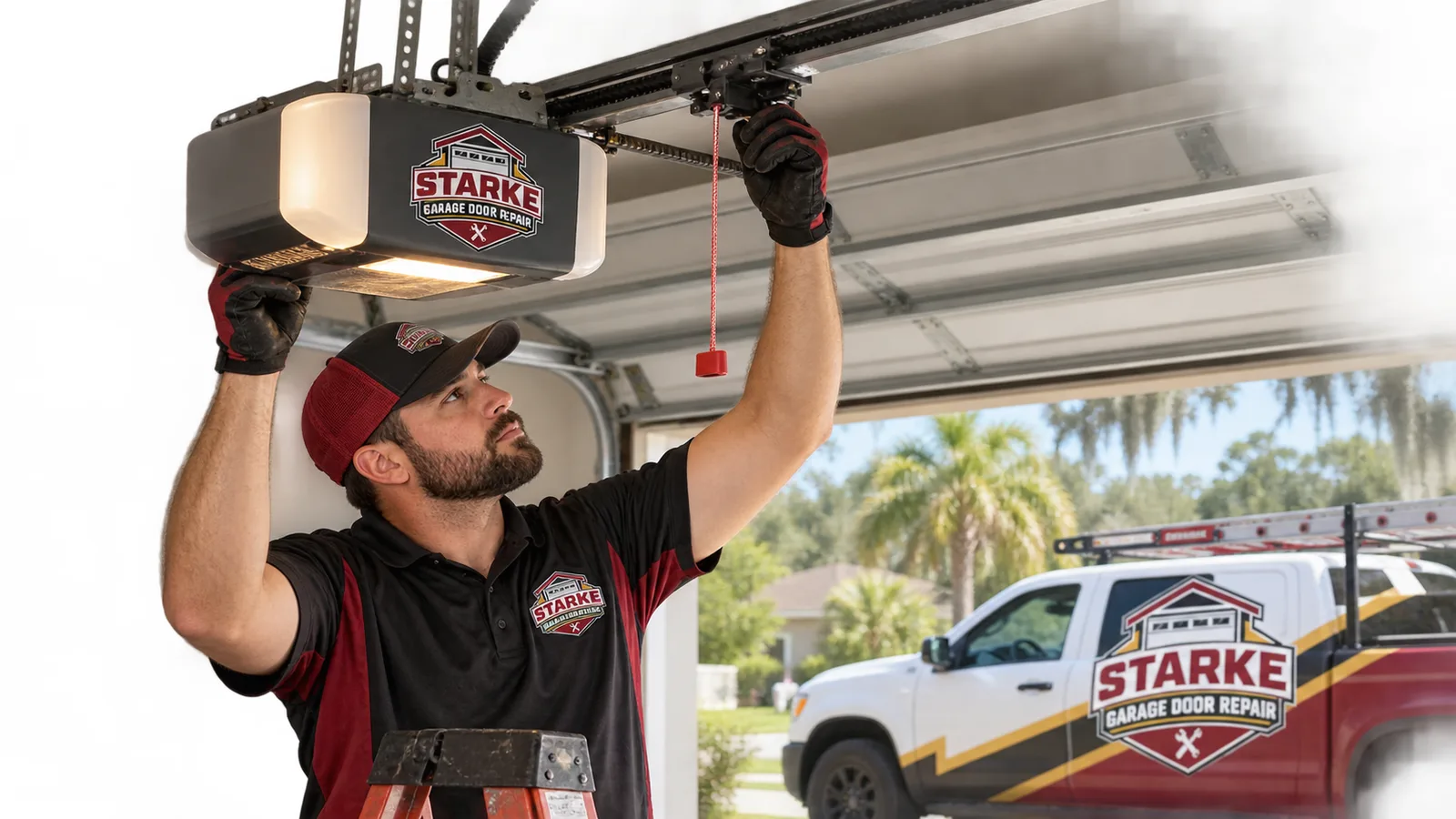
Opener repair in Starke, Florida
Get a proper diagnosis for an opener that will not respond, reverses unexpectedly, stops mid-travel, or makes new noises.
Complete diagnosis
When a powered garage door stops working correctly, the opener is only one part of the system that needs to be checked. Starke Garage Door Repair approaches garage door opener repair Starke FL property owners need by looking at the controls, safety sensors, travel settings, rail, trolley, drive system, and door movement.
That complete check matters because an opener can appear faulty when the door itself is binding or poorly balanced. A disconnected trolley, blocked photo eye, damaged wire, failed wall control, stripped gear, worn drive component, or incorrect force setting can produce similar symptoms. The goal is to identify the actual fault before recommending a repair.
Florida heat and humidity can also affect electronics, connections, and moving parts in a garage. Storm-related power interruptions may reset limits or expose a weak circuit board or power component. These conditions do not prove what failed, but they provide useful context during diagnosis.
Symptoms and causes
An opener that does nothing may have a power, control, wiring, logic board, or motor issue. If the remote works but the wall control does not, or the wall control works while every remote fails, that difference helps narrow the problem. A door that closes and immediately reverses often calls for inspection of the photo eyes, sensor wiring, travel limits, force settings, and the path of the door.
Grinding commonly points toward an internal gear, sprocket, trolley, or drive problem. Humming without movement can indicate a jammed mechanism or motor-related fault. Intermittent operation may involve loose wiring, an overheating component, radio interference, or a control board beginning to fail.
A door that feels unusually heavy when disconnected from the opener should not be forced with the motor. The spring system carries the door's weight; the opener guides a properly balanced door through its travel. If the fault involves the door, tracks, rollers, cables, or springs rather than the motor unit, garage door repair in Starke addresses that wider mechanical scope.
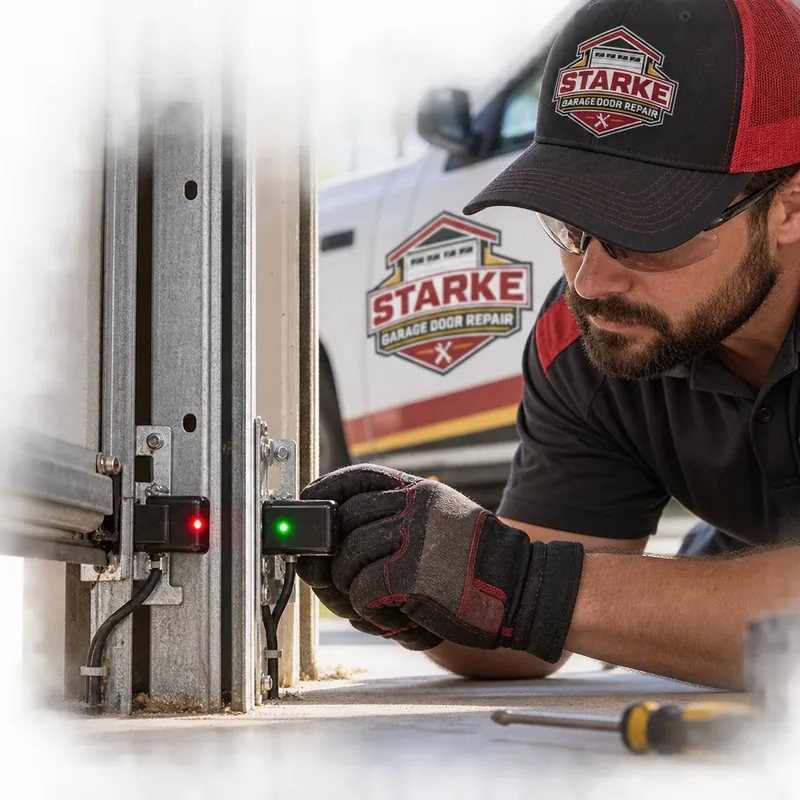
Complete system check
Testing can include the wall station, remotes, keypad response, outlet power, lock mode, wiring connections, and opener lights.
Both photo eyes should be mounted securely, aimed at each other, unobstructed, and connected by intact low-voltage wiring.
Open and close limits determine stopping points. Force settings affect how the unit responds to resistance and should not be increased to overcome a binding door.
The rail, trolley, emergency release, arm, brackets, and mounting points are checked for wear, damage, looseness, and correct engagement.
Chain, belt, or screw-drive parts are inspected along with gears and sprockets, using the service needs of the installed opener type.
Manual movement and balance help show whether the opener is the source of the trouble or is struggling against a separate door problem.
Service sequence
Tell us what the unit does, which controls still work, whether the problem is constant or intermittent, and whether it began after an outage, storm, impact, or unusual noise.
The opener and connected door system are checked methodically. Testing separates control problems, sensor faults, incorrect settings, worn drive parts, and door-related resistance.
The findings determine which components need attention and whether repair is sensible for the unit's condition. The proposed work can then be reviewed before it starts.
After the applicable work is completed, the door is cycled to verify travel, stopping points, control response, sensor behavior, and normal movement.
Options
Repair often makes sense when the unit is otherwise serviceable and the problem is limited to a control, sensor, wiring connection, setting, gear, sprocket, or another replaceable component. Replacement may be the better choice when major parts have failed, repair parts are unavailable, or the rail or motor assembly has extensive damage.
Compatibility matters here. The opener must match the door's size, weight, construction, and operating condition. A stronger motor is not a substitute for correcting a door that binds or has a spring problem. Likewise, remotes and keypads must use a compatible frequency and programming system; a universal accessory is not compatible with every model.
We can assess the installed equipment and lay out the options based on what testing reveals. That way the recommendation comes from the actual condition of the opener and door rather than one symptom alone.
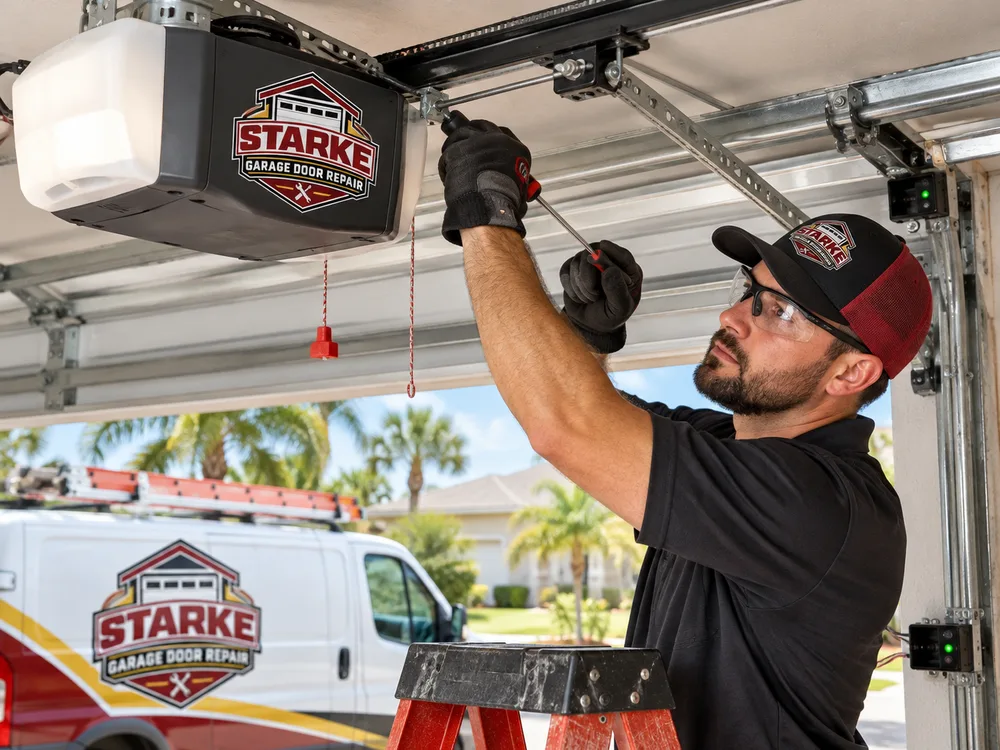
Safe troubleshooting
Basic checks can be useful before arranging service. Confirm that the opener is plugged in, test the outlet with an appropriate device, replace remote batteries, check whether the wall control's lock mode is active, and remove objects near the sensor beam. Clean sensor lenses gently and look for loose sensor brackets.
Do not bypass photo eyes or keep increasing the force setting to make a door close. Federal safety standards have required entrapment-protection features on residential garage door openers manufactured since 1993. A reversing problem deserves proper testing because those controls are intended to reduce injury and property damage.
Avoid opening the motor housing or adjusting springs and cables without suitable training. Garage door springs store substantial energy, and opener components can move unexpectedly when power is restored. If the door is crooked, a cable is loose, a spring appears broken, or the door drops when released, stop operating it until the mechanical problem is assessed.
Describe what the opener is doing, which controls respond, and any noise you hear. Those details help focus the diagnosis and establish a clear repair plan.
CALL NOW: (904) 966-4094Common questions
A door that closes and reverses may have blocked or misaligned photo eyes, damaged sensor wiring, incorrect travel settings, or resistance in the door's movement. Florida garages can collect dust, insects, and moisture around low-mounted sensors, so the lenses, brackets, wiring, and indicator lights should be checked before settings are changed.
Yes, many motor-running failures are repairable when the cause is a disconnected trolley, stripped gear, worn sprocket, damaged belt or chain component, or loose door arm. The door should also be moved manually after proper release to check for binding or excess weight before the opener is run again.
Diagnosis, access, model, and part availability shape the work. Older or discontinued opener models may require extra effort to confirm whether compatible repair parts still exist.
Repair is reasonable when the unit is in serviceable condition, parts are available, and the fault is limited. Replacement deserves consideration when major assemblies are damaged, parts are obsolete, failures keep recurring, or the opener lacks modern entrapment-protection equipment. We can base the recommendation on inspection rather than age alone.
Short remote range can result from weak batteries, antenna position, radio interference, a damaged remote, or a receiver or logic-board problem. LED bulbs that are not designed for garage door openers can sometimes create radio-frequency interference, so testing with the opener lights off may help isolate the cause.
No, the opener's force should not be increased to compensate for a heavy or poorly balanced door. With the opener properly disconnected, the door should move without severe binding and should not drop abruptly. Spring and cable work carries stored-energy hazards and should be handled as a mechanical door repair.
The opener brand and model, approximate symptoms, which controls work, sensor-light behavior, and any recent outage or impact are useful. A photo of the motor label can also help identify likely parts, though on-site testing is still needed to confirm the fault.
Get started
Tell us about the symptoms and when they started. A focused inspection can identify whether the problem is in the opener, controls, sensors, or the door itself.